

How to Tell If Coffee Beans Are Fresh: 7 Signs
Table of Contents
- How to Tell If Coffee Beans Are Fresh Using the Bag Puff Test
- Visual Checks: Dull Appearance vs. Oil Migration
- Visual Checks: Dull Appearance vs. Oil Migration
- Aroma, Fragrance, and the Bloom During Brewing
- Coffee Roast Date vs. Expiration Date: Which One Matters
- How Long Do Coffee Beans Last After Opening?
- How to Store Coffee Beans for Freshness
- Frequently Asked Questions
Last Updated: September 11, 2026
How to Tell If Coffee Beans Are Fresh Using the Bag Puff Test
Knowing how to tell if coffee beans are fresh starts with one of the most reliable signals available before you open the bag: the puff of gas that escapes when you break the seal. That release is carbon dioxide, a natural byproduct of roasting, and one of the clearest indicators of when the beans were roasted. At Brew4UFresh, we roast to order because that window of active degassing is short and worth protecting.
Fresh coffee beans are at their best roughly 4 to 14 days after roasting, and the bag puff test gives you a fast way to check where a batch sits in that window without any equipment (peer-reviewed research).
The simplest version: press gently on a sealed bag and listen for a hiss, or open the valve and feel for escaping gas. A strong puff points to recent roasting; silence usually means the beans have released most of their carbon dioxide. Below, we break down every check, from the valve to the bloom.
What the One-Way Valve Tells You
A one-way valve is a small disc built into most coffee bags that lets carbon dioxide escape while keeping oxygen out. Freshly roasted beans release gas for days, and a fully sealed bag would balloon or trap stale air against the beans (PubMed).
When you press a sealed bag and hear gas hiss through the valve, the beans are still degassing. That is a good sign. When the bag feels slack and pressing it produces nothing, the resting period is likely over.
The valve also protects flavor during shipping: oxygen is the primary enemy of roasted coffee, and the valve releases pressure without letting air back in. If a bag has no valve, be skeptical of any freshness claims printed on it.
Why a Flat Bag Does Not Always Mean Stale Coffee
A slack bag is not proof of stale beans: the puff test only measures how much carbon dioxide is still coming off the coffee, not how much flavor is left. Two scenarios produce a flat bag with perfectly fresh coffee:
- The beans have finished degassing but are still within peak flavor. Most of the carbon dioxide escapes in the first several days, yet the coffee often tastes best from about day 4 through day 14. A bag that has gone quiet on day 8 can still brew an excellent cup.
- The roaster packaged after most degassing was complete. Some roasters rest beans before bagging, or use packaging that vents aggressively, so the bag arrives flat even though the roast date is recent.
A bag that puffs strongly on arrival and goes quiet within a week is normal degassing, not a defect. The real warning sign is the reverse: a firm, pressurized bag with an old roast date, meaning the seal is holding in gas that should have escaped long ago.
The Science Behind the Puff: A Quick Degassing Primer
Understanding why the bag puffs makes the test more useful. During roasting, heat drives chemical reactions, including the Maillard reaction and caramelization, that generate carbon dioxide trapped inside the bean's porous cell structure. After the roast, that gas migrates out over days to weeks.
The release is fastest right after roasting and tapers off, which is why a bag roasted yesterday puffs hard and one roasted a month ago barely moves. The same carbon dioxide powers the bloom when hot water hits the grounds, so the bag puff and the bloom are two views of one process.
A few practical implications follow from this mechanism:
- Resting matters. Brewing beans the same day they were roasted often produces an uneven, gassy extraction. Waiting a few days lets enough carbon dioxide escape for water to contact the grounds evenly.
- Grinding accelerates degassing. Once you grind, the increased surface area releases carbon dioxide in minutes rather than days, which is why pre-ground coffee goes flat so quickly.
- Roast level changes the curve. Darker roasts tend to degas faster and peak sooner than lighter roasts, so a dark roast may read "quiet" on the bag while a light roast from the same roast date still puffs.
Visual Checks: Dull Appearance vs. Oil Migration
Visual Checks: Dull Appearance vs. Oil Migration
Your eyes catch what the bag hides. Fresh beans typically look matte and slightly dry on the surface, especially lighter roasts, because the oils are still locked inside the bean. As beans age, those oils migrate outward, and the surface turns shiny.
That shine is not automatically bad. Dark roasts are oily from the start because the longer roast pulls oils to the surface quickly. The signal to watch is change over time: beans that started matte and turned glossy have been exposed to oxygen for a while.
Two visual red flags stand out:
- A dull, faded, grayish appearance on beans that should look rich and even
- Heavy surface oil combined with a slack bag, which points to oxidation rather than a fresh dark roast
A common mistake is judging freshness by color alone. Roast level changes appearance far more than age does, so always pair the visual check with the roast date.
Aroma, Fragrance, and the Bloom During Brewing
The bloom is the most honest freshness test you can run, because it happens in front of you. When hot water hits fresh ground coffee, trapped carbon dioxide rushes out and the bed swells into a thick, foamy dome of bubbles. Its size tells you how much gas remains.
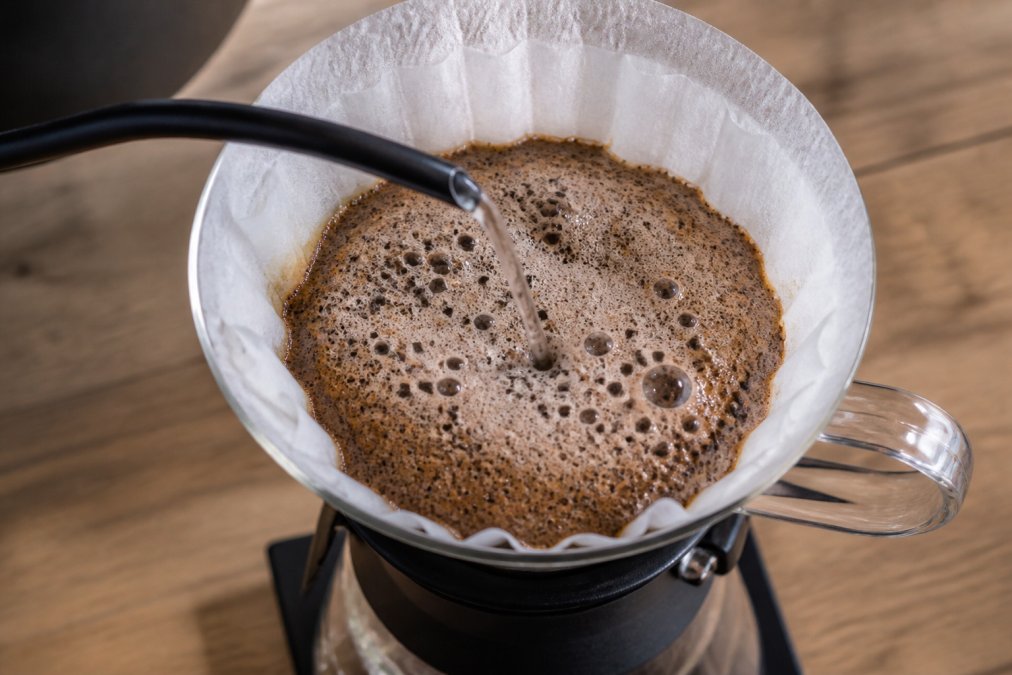
A vigorous bloom with lots of foamy bubbles signals beans still within their peak freshness window. A weak bloom suggests the carbon dioxide has already escaped, and the cup will likely taste flat.
Smell matters just as much. Fresh beans hit you with a clear, vibrant fragrance the moment you open the bag or grind them; stale beans smell muted, dusty, or faintly like cardboard. If you have to work to detect any aroma, that is your answer.
Coffee Roast Date vs. Expiration Date: Which One Matters
The roast date is the only date that tells you anything useful about freshness. An expiration date is a manufacturer's estimate of how long the coffee stays sellable, often set a year or more out, and says nothing about when the beans were roasted.
Here is the practical difference:
| Date on the Bag | What It Tells You | How to Use It |
|---|---|---|
| Roast date | The day the beans were roasted | Judge freshness directly from this |
| Best-by date | A rough sell-by estimate | Ignore for freshness decisions |
| Expiration date | A long-range safety window | Ignore for freshness decisions |
If a bag shows only an expiration date and no roast date, treat that as a warning. Roasters confident in their freshness typically print the roast date because it works in their favor.
The resting period sits between roasting and peak drinking. Many beans taste best a few days after roasting, once they have degassed enough to brew evenly, so the freshest bag is not always the best cup on day one. Start drinking within the first week and finish before the beans go flat.
How Long Do Coffee Beans Last After Opening?
Once you open a bag, the clock speeds up. Whole bean coffee holds good flavor for about two to four weeks after opening when stored well, while ground coffee fades in days because far more surface area is exposed to oxygen (peer-reviewed research).
Several factors decide how fast that decline happens:
- Whole bean vs. ground: whole beans keep their internal oils protected much longer
- Roast level: darker roasts tend to peak sooner and fade faster
- Storage conditions: moisture, heat, and oxygen exposure all accelerate staling
- Packaging: a one-way valve and a proper seal slow the process considerably
The honest limit is taste, not the calendar. If your coffee tastes hollow, papery, or rancid, it has gone stale regardless of the date. For a deeper look at storage, our guide on [how to store coffee beans for freshness] covers containers and techniques in detail.
How to Store Coffee Beans for Freshness
Storing coffee well comes down to blocking four things: oxygen, moisture, heat, and light. Get those under control and your beans hold their flavor far longer. The details matter, though, because the four enemies act at different speeds and the right move depends on how fast you plan to drink the bag.
Follow these steps:
- Keep beans whole until brewing. Grind right before you brew to limit oxygen exposure. Ground coffee can lose most of its aromatic punch within days, while whole beans hold up for weeks.
- Use an airtight, opaque container. A sealed, opaque canister beats a rolled-up bag every time. If you keep the original bag, squeeze out excess air and seal it fully.
- Store at room temperature, away from light. A cool, dark cabinet works well. Skip the shelf above the stove, where heat cycles push oxidation along.
- Buy in quantities you will finish. A smaller bag you drink fresh beats a large one that sits for weeks.
- Avoid the fridge for daily use. Condensation and food odors creep in each time you open the door.
Why Roast Level Changes Your Storage Clock
Not all beans age at the same rate, and roast level is the biggest variable most guides ignore. Darker roasts are roasted longer and hotter, driving oils to the surface where oxygen can reach them. As a result, dark roasts peak sooner and fade faster, often best within the first week or two.
Lighter roasts keep more oils inside the bean and hold their flavor longer, sometimes staying vibrant well past the two-week mark. Two bags roasted on the same day can be at very different points in their life, so judge each bag on its own merits.
A related factor is density. Denser, higher-grown beans often hold up better over time than softer ones, so origin and varietal can shift the aging curve too.
How to Freeze Coffee Beans the Right Way
Freezing is the single best way to stretch a large order without losing quality, provided you do it correctly. The goal is to stop the clock without introducing moisture, which is why technique matters.
Here is a reliable approach:
- Freeze whole beans, not ground. Whole beans have far less exposed surface area, so they survive freezing better.
- Portion before freezing. Divide the bag into amounts you will use in about a week. This lets you thaw only what you need and avoids repeatedly opening the same container.
- Seal airtight. Use a vacuum-sealed bag or a heavy-duty freezer bag with as much air pressed out as possible. Oxygen is still the enemy inside the freezer.
- Label with the roast date. Frozen coffee does not stay fresh forever; a date helps you rotate stock.
- Thaw fully before grinding. Let the portion come to room temperature in its sealed container before you open it. Opening it cold invites condensation onto the beans.
- Never refreeze. Each thaw-and-refreeze cycle adds moisture and degrades flavor, so commit to a portion once you pull it out.
Done this way, frozen beans hold good flavor for several months, far longer than in a pantry. The trade-off is convenience: you lose the grab-and-go ease of a countertop canister, so freezing makes the most sense for a backup bag or a bulk order you will work through slowly.
Match the Method to Your Timeline
The right storage choice depends on how quickly you will drink the coffee:
- Drinking within two weeks: an airtight, opaque canister at room temperature is all you need.
- Drinking over one to two months: freeze in weekly portions and thaw as you go.
- Buying in bulk: split the order immediately, keep one week's worth out and freeze the rest.
Frequently Asked Questions
What is the 15-15-15 rule for coffee?
The 15-15-15 rule is a freshness guideline: green coffee stays good for about 15 months, roasted whole bean coffee for 15 weeks, and ground coffee for 15 minutes before flavor starts dropping off. It is a rough rule of thumb, not a hard cutoff. Whole bean coffee stored properly can taste good past 15 weeks, and ground coffee sealed in an airtight container holds up longer than 15 minutes, but the principle holds: the more you break down the bean, the faster coffee bean freshness fades.
Do coffee beans have an expiration date?
Most bags carry a best-by date, but that is not the same as a roast date. A coffee roast date vs expiration date comparison shows the roast date is what actually tells you how fresh the beans are. Expiration dates on coffee are often set a year or more out and say little about peak freshness. Check for a roast date first. If the bag only shows a best-by date far in the future, treat the coffee as older than ideal and inspect the beans for dull appearance, weak aroma, or a flat bloom before brewing.
How long do coffee beans last after opening?
Whole bean coffee holds peak flavor for about two to four weeks after opening when stored in an airtight container away from light, heat, and moisture. After that window, oxidation and degassing continue, and you will notice papery notes, a hollow taste, or a weaker bloom. Ground coffee declines much faster, often within days. If you buy more than you drink in a month, split the bag and freeze part of it to protect coffee bean freshness.
How can you tell if coffee beans have gone rancid?
Rancid beans smell like old cooking oil, cardboard, or damp wood rather than the roast's original aroma. Visually, they look dull instead of glossy, and dark roasts may show heavy oil migration that has turned sticky. Brewed, they produce a flat, hollow cup with no foamy bubbles during the bloom. If the bag puffs weakly when squeezed and the fragrance is faint, the beans are past peak freshness. Toss them or use them for cold brew, which masks some staleness.